
Research
and
Creative Activity


Research Overview
My research focuses on embodiment in performance, actor training pedagogy, and devised theatre for social change. Specifically, my research investigates 1) holistic approaches to performance that honor the mind-body connection, 2) compassionate, trauma-informed actor training pedagogy to foster growth, resilience, and dynamic storytelling, and 3) devised theatre focused on gender equity and social justice issues. Four distinct but interrelated methodologies support my research: Margolis Method, Lessac Kinesensics, Noh Theatre performance, and Compassionate and Contemplative Pedagogies.
Margolis Method
Margolis Method, based on principles of physics, is a trauma-informed approach to actor training and to theatre-making which greatly informs my acting pedagogy and theatre-making processes. I am currently working on a book project on Margolis Method titled Margolis Method: Advancing Embodiment, Craft, and Care in Performance. The book is to be published by Routledge. In collaboration with co-editors and contributors Kari Margolis and Kym Longhi, this is the first book to provide an overview of the origins, theory, and applications of Margolis Method in theatre and across performance disciplines. Essays and interviews with Kari Margolis accompany contributions from twenty-four educators and practitioners in the topics of using Margolis Method in acting, actor training, directing, devising, singing, dance, conducting, and playwriting. I am contributing two chapters to the book in addition to co-writing the introduction and co-editing the entire book. My chapters include “Evolving Stanislavski-based Acting with Margolis Method,” and “It’s All about Gravity: Noh and Margolis Method.” These two chapters allow me to integrate several areas of my research. Importantly, there is no published research on Margolis Method, with the exception of one journal article. This book will fill a large gap in scholarship and greatly contribute to the fields of actor training, embodied performance, and trauma-informed theatre practices.
Lessac Kinesensics, Noh, Compassionate and Contemplative Pedagogies
My research in Lessac Kinesensics, Compassionate and Contemplative Pedagogies, and Noh Theatre intersect in multiple ways. Kinesensics, a somatic, contemplative body-voice training process, connects closely with my research in Compassionate and Contemplative Pedagogies. These intersections have been recognized by the Lessac Training and Research Institute (LTRI) through two invitations to present my research and teaching at international LTRI events in 2024 and 2026. These research connections enhance my creative practices in directing, devising, and supporting Theatre and Dance Department productions through voice and movement coaching. My research in Compassionate and Contemplative Pedagogy seeks to meet the current needs of theatre practitioners as a focus on care continues around actor training and rehearsal practices. I have shared this research at multiple international theatre and voice conferences, focusing on the capacity of Lessac Kinesensics to bolster the “Soothing System” of students and actors. Finally, my connections between Noh and Lessac led to the publication of an interview with Master Noh actor Akira Matsui in the Voice and Speech Review. My research on the principles and practices of Noh theatre is interwoven into my teaching and creative practices. This research was deepened in 2024 while training in Tokyo, Japan with Noh actor Teruhisa Oshima. This hands-on research was deeply fruitful. It afforded me deep connections with Theatre Nohgaku, an international theatre company with whom I am collaborating for a study abroad program. It fostered connection to Akira Matsui and set the conditions for my interview with him and later publication. Last, it created an opportunity for publication as it inspired a chapter on the connections between Noh and Margolis Method which I am writing for my book.
Creative Research
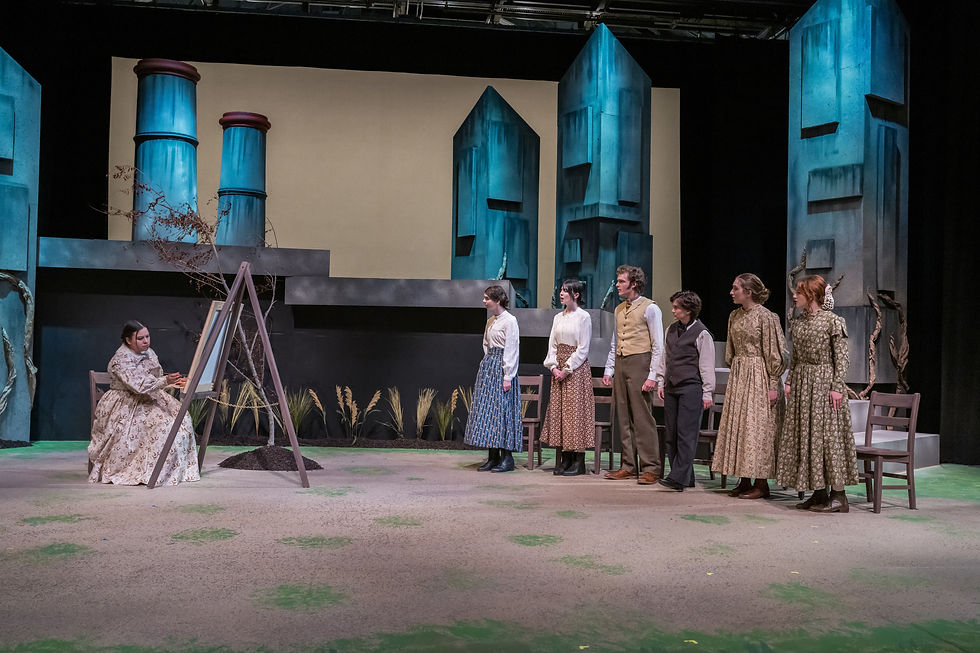
As a creative researcher, my devised project of Beautiful, Useful, True allowed me to apply my research of Margolis Method and Lessac Kinesensics. This project was inspired by Eunice Newton Foote whose voice was not heard in her lifetime, despite her discovery of the Greenhouse Effect. With a focus on issues of gender equity and climate justice, I wanted this project to elevate female voices. To do this, I interviewed thirteen female faculty from Appalachian State University and female leaders from six regional organizations as source material for this production. Through hours of collaboration with the interviewees, production dramaturg Dr. Derek Davidson, and the student-devisors, we wove the words of these women into the playscript. The result was a mosaic of voices, inviting the audience to consider the value and efficacy of women’s contributions to science and humanity. After each performance, a talk-back panel composed of interviewees engaged with spectators on topics of gender equity and climate justice. We created conversations beyond the production itself to inspire spectators to remain engaged in these topics following the play. This production allowed me to forge a strong relationship with the university Quality Enhancement Plan leaders Dr. Shea Tuberty and Professor Laura England who seem eager to support future projects like this.
Future Research
Future research projects span all areas and methodologies of my research. Writing my chapter on Margolis Method and Stanislavski-based acting revealed the many connections and similarities between Margolis and Stanislavski. How each artist thinks about time/timing, dramatic action, physicality, and causality in performance are quite similar yet the connections and similarity between these two artists has gone unexplored. This offers fertile ground for future research and publications. I aim to share my findings at Stanislavsky-focused research conferences. My book project also revealed the lack of research in vulnerability studies by theatre scholars. “Vulnerability” is a term used frequently in acting classes and texts, yet it is rarely defined. Margolis Method offers a way to define vulnerability that safeguards the actor and I aim to expand vulnerability research in theatre through my research in Margolis Method. Also connected to my work in Margolis Method, Kym Longhi and I are looking at ways of advancing the vocal work of Margolis Method through my research in Lessac Kinesensics. Kinesensics offers concrete vocal vocabulary that Margolis Method is currently lacking. We see opportunities to advance research in both methodologies with this research. In the coming three years, I am planning to apply for a Fulbright award to continue my research of Noh and Asian performance traditions.
Future creative projects include adapting Beautiful, Useful, True into a solo production. The aim would then be to perform this at regional schools in collaboration with area organizations such as Blue Ridge Women in Agriculture. In early 2026, I will be part of the PREParation for Appalachian Research Experiences (PREPARE) Program, during which I will look for fellowship and grant opportunities to bring this to fruition. My research vision consists of strengthening the intersections between my four methodologies to create clearer and more effective ways to honor the whole person in performance and performance training and to create theatrical works advancing gender equity and social justice issues.